
by Diana S., BCBA, LBA-IL
We all know that change can be a tough pill to swallow, especially for kids who thrive on routine. Whether it’s a new snack at lunch or something as big as a family move, changes can stir up all sorts of feelings. But here’s the good news: with a little guidance and practice, we can help our children learn to embrace change rather than resist it. Think about it: being flexible can turn a potentially stressful situation into an opportunity for growth. It helps our children:
– Transition smoothly between activities, like moving from playtime to homework.
– Cope with disappointment when things don’t go as expected, like when a planned trip to the zoo gets canceled.
– Problem-solve when routines shift, like dealing with a new teacher or class schedule.
– Engage more fully in family outings or school events.
– Build independence, knowing they can handle new situations.
Just like communication skills and self-help techniques, flexibility takes time and practice to develop. Here are some practical strategies to make change a little less daunting for your child:
- Start with Small Changes
Ever tried taking a different route home? It’s a small tweak, but it works wonders! Introduce low-stakes changes that your child can manage with your support. Maybe switch up their plate for dinner or let them choose the order of activities one evening. By starting small, we help kids feel successful without overwhelming them.
- Use Visual Supports
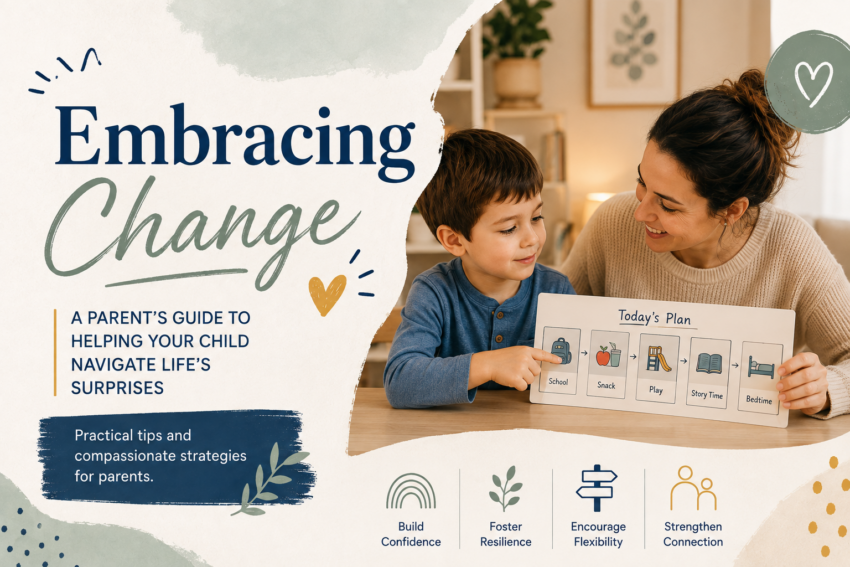
Many kids respond really well to visuals. Consider using a visual schedule or a “first-then” board. For example, if your child refuses to take off their shoes, show them a simple visual: first, shoes off; then, a fun game at home. This provides a clear picture of what’s happening next and helps ease anxiety.
- ‘Prime’ Your Child Ahead of Time
Preparation is key! Before a change, talk about what to expect. For instance, if Grandma is picking them up instead of Dad, you could say, “Tomorrow, Grandma is coming for you! Let’s look at a picture of her and imagine what it’ll be like.” This kind of prepping can reduce surprise and make the change feel more manageable.
- Teach Coping Skills Directly
Kids often need a little guidance on what to do when plans change. During calm moments, teach them specific coping skills. You might say: “If you start to feel upset, remember to take a deep breath.”, or “It’s okay to ask for a break if you need one.” Practicing these skills ahead of time gives them the tools they need when things don’t go as planned.
- Reinforce Flexible Behavior
Celebrate when your child manages a change well, even if it’s just a small victory. Acknowledge their achievement with praise or a little reward. For example, if they handle a surprise change without a fuss, say, “Wow! You stayed calm when plans changed. That was really nice!” Positive reinforcement encourages them to keep being flexible in the future.
- Use Gradual Exposure for Bigger Changes
Some changes are bigger and require more preparation. Let’s say your child is starting a new school. Instead of throwing them into a full day right away, break it down: Take a tour of the building, meet the teacher for a quick chat, and practice the drop-off routine together. This gradual exposure builds familiarity and reduces the chances of anxiety.
Sometimes, however, even with our best efforts, some changes can be tough. When that happens, it’s important to stay calm and consistent. Here are some ways to respond supportively:
– Keep it Simple: Use clear language. Over-explaining can increase stress.
– Acknowledge Feelings: Let them know you understand. “I see this feels different. It’s okay to feel that way.”
– Restate the Plan Clearly: If plans shift suddenly, clarify what will happen next. “The park is closed, so we’re going to have a fun puzzle time at home instead.”
– Prompt Coping Skills: Remind them to use those calming techniques you practiced earlier. “Let’s take a deep breath together and then talk about it.” Just remember, change is part of life!
By helping our children learn to embrace it, we equip them with essential skills for navigating the world around them. With patience and practice, they’ll grow into more adaptable and resilient individuals. Let’s embrace the journey together!